
Medievalish 5.4
Wit and Mystery

Dear friend,
I thought I’d choose two anonymous short poems for us today that often stick in my brain.1 Both offer a little needed space from relying too much on my own wit.
The fifteenth century is an interesting place, poetically speaking (really, in all ways speaking, in my opinion). The major highlights of English poetry in the Middle Ages have already, for the most part, occurred. C.S. Lewis called it “The Drab Age”, much to my amusement. Until Thomas Wyatt adopts the Italian sonnet and kickstarts English poetry back up while singing songs in praise of Anne Boleyn, there wouldn’t be poet superstars for quite a while.
However, I still really enjoy fifteenth-century poetry. Its pleasures are more hidden, less based on the wonders of meter and startling image and wordplay, more based on the joy of charm, antiquity, and occasional truth-telling, which are less appealing devices to most modern-day editors and English majors (for good reason). In other words, I don’t necessarily love these for their poetic merit or cleverness—but I do love them for their ideas, for their ancient strangeness, and even, at times, their otherworldly glimpses into divine things that refresh my own way of looking.
Consider, for instance, this poem spoken by Christ post-Ascension, that I really like, that only appears in one manuscript, Advocates MS. 19.I.II. (text from Browne’s Religious Lyrics of the XVth Century). I won’t give you a translation, just to exercise your brain, because the Middle English is coming closer and closer to modern:
I Haue laborede sore and suffered deyth,
and now I Rest and and draw my breyght;
But I schall come and call Ryght sone
Heuene and erght and helle to dome;
and thane schall know both deuyll and mane,
What I was and what I ame.
I love the idea of Jesus resting and breathing after his labors and victory over death, and his promise of return. At first read this may sound ominous—but given what we know of Christ in his gospels, in his loving, in his way, the knowledge of “What I was and what I am” opens up into a promise of true, dawning recognition and mercy at judgment.
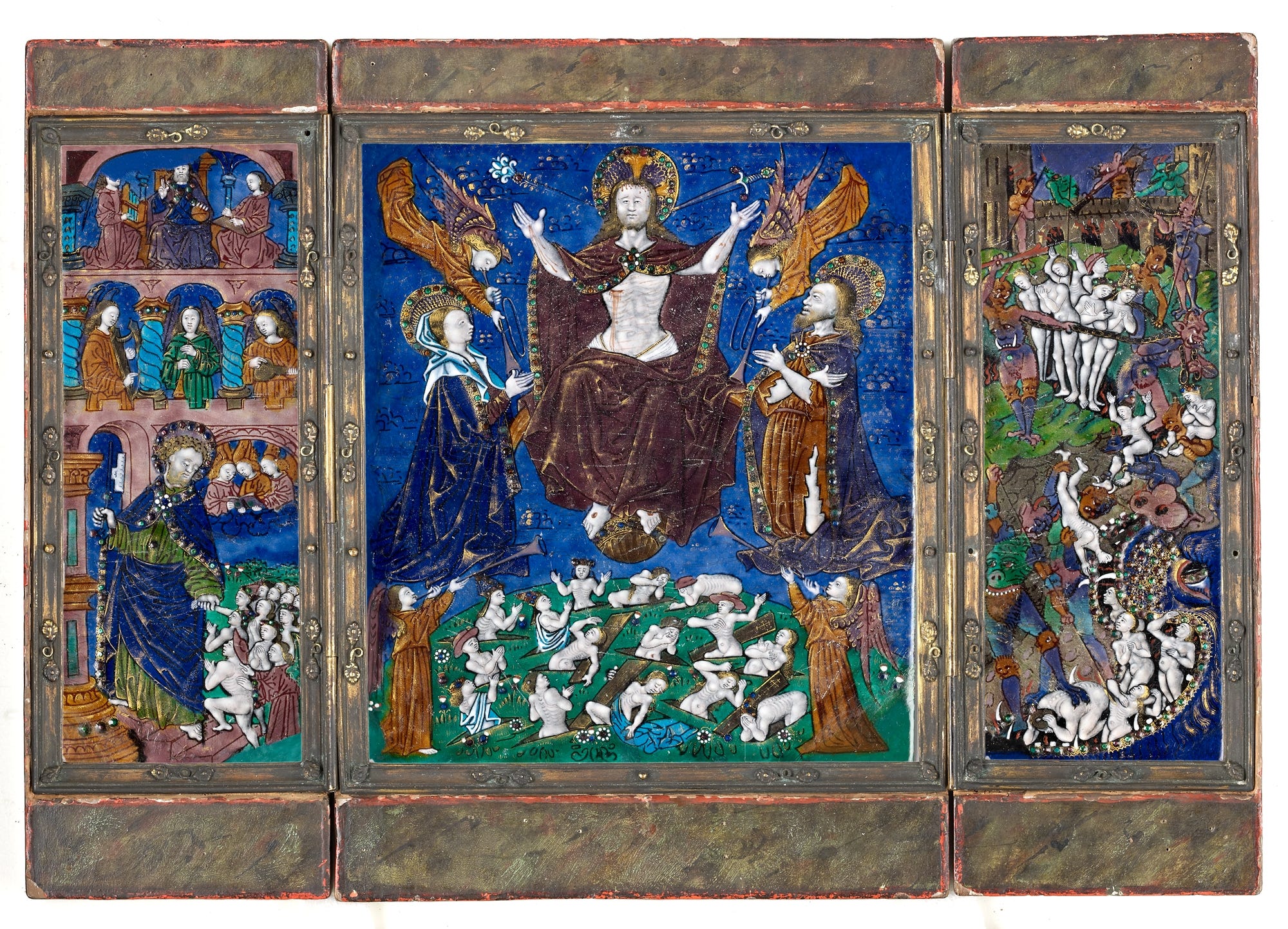
Here’s another that I like. Modern day editor Carleton Browne has entitled this fifteenth-century poem “The Divine Paradox,” and you’ll see why. Found in Ms. Rawlinson B. 332, it dates from the very end of the fifteenth-century and was inspired by ongoing debates in that century led by the famous Bishop Reginald Pecock in the English church against the Lollards.
The church has always debated the role of reason and mystery—how they work together, which one takes precedence, and so on. Unlike modern dichotomies of reason and faith, often expressed through the false dichotomy of science and religion, medieval people did not see these things at odd with one another, unless we set them at odds with one another with persistent striving that everything must make intellectual sense at all times. We know, when we stop to think about it, what a foolish endeavor this can be. To parrot St. Augustine, I barely even understand my inner self at times. Great theologians like St. Thomas Aquinas argued that our reason is the primary way that we are made in the image of God. It’s a great gift to know and see and piece together how things work, consequences, the very real beauty of the world. And yet there is so much we do not understand. This is not a cause for shame, but it is a reason to be humble and to keep learning and listening and wondering.
A God and yet a man?
A mayde and yet a mother?
Witt wonders what witt Can
Conceave this or the other.

A god, and Can he die?
A dead man, can he live?
What witt can well replie?
What reason reason give?

God, truth itselfe, doth teach it;
Mans witt senckes [sinks] too farr vnder
By reasons power to reach it.
Beleeve and leave to wonder!
I love the question form that reminds us that this is very strange stuff, what Christians believe. Do not domesticize it, do not try to explain it with the replies of wit and reason. Reason is not enough—but wonder is! The gospel’s legibility to foolish ones and children, and not just the wise and worldly, to whom everything else is legible, is part of the good news itself.
What I’ve been up to this month:
Writing and researching.
Wonderful teaching times in Gainesville, Florida, at the Christian Study Center. What a lovely, learning-filled place!
Old Books with Grace concluded the Lent series, and a new episode featuring Mischa Willett on Samuel Taylor Coleridge will be out this week.
What’s next:
Female Denverites: I’ll be speaking at Church of the Ascension’s women’s retreat on April 18th.
Coming up this September: I’ll be leading a workshop on Julian of Norwich and attention at an incredible weekend retreat outside of San Diego with some other brilliant speakers. Check it out.
What I’ve been reading this month:
Nonfiction: More Evelyn Underhill.
Fiction: Reread Susannah Clarke’s Piranesi. Perfection.
Medieval/Medieval-adjacent: Caroline Walker Bynum’s Fragmentation and Redemption.
Article: “What Atheism Could Not Explain,” from The Atlantic.
A Prayer from the Past
This is a beautiful first-century prayer from the Syrian Clementine liturgy, found in Prayers of the Early Church, ed. J. Manning Potts, published 1954. Send us peace, O Lord!
O God,
Who art the unsearchable abyss of peace, the ineffable sea of love, the fountain of blessings, and the bestower of affection, Who sendest peace to those that receive it; open to us this day the sea of Thy love, and water us with the plenteous streams from the riches of Thy grace. Make us children of quietness, and heirs of peace. Enkindle in us the fire of Thy love; sow in us Thy fear; strengthen our weakness by Thy power; bind us closely to Thee and to each other in one firm bond of unity; for the sake of Jesus Christ.
Amen.
Peace for your April,
Grace
P.S. Medievalish is free, and I’d be delighted if you shared it with a friend!
I am fairly weary and worn down this month. So in the spirit of Resurrection, I will give you an old post made new! I originally published this piece in 2023 for paid subscribers, back when I experimented with that (crazy that it was almost two years ago), so many of you have never encountered it before. This was published in a period of intensive thinking and writing, as I’m up to right now.
Thank you for these posts. You always speak to my soul. May God bless you and yours!